
Incubating the Future
When everything feels like it’s breaking, something new is being born

Our age is one of collapsing time. News cycles change by the second, information overwhelms us faster than we can process it, and perspective gets lost amidst a blur of immediacy.
Our ability to see the broader picture is being continuously eclipsed by the stimuli of the moment. We scroll through our feeds — but how much are we actually reading and processing? Headlines strike the amygdala, bypassing the slower circuits of thought that ask us to pause, ponder, and seek nuance and context.
We are reluctant navigators, with no choice but to take to lifeboats as the vessels of our past slip beneath the waters of technological upheaval and social disorientation. The old charts and maps handed down by our ancestors — the ones that guided our relationship to the natural world and defined the boundaries of knowledge — have grown unreliable. We’re left to grapple with shifting topographies shaped by industrial, scientific, and digital revolutions. And now, as we face the climate crisis and the unknowns of artificial intelligence, our sense of being unmoored only deepens.
All this would have been destabilizing enough without our democracy itself being shaken to the core. What once felt like permanent edifices of the American experiment — the rule of law, constitutional protections, the separation of powers, an abhorrence of corruption, the very notion of a common good rooted in our humanity — now crack under the strain of twenty-first-century autocracy.
It’s tempting, as we stare into our phones, to believe that all this topsy-turvy modernity has severed us from the past — that the fears, anxieties, and challenges of our age are uniquely fraught. At the same time, as we fixate on what’s failing, we lose sight of what endures — basic human instincts, our hopes, our sense of community, our ability to mend what’s broken — all of it slipping out of focus amid the daily strain of our fevered reckonings.
Equilibrium seems unattainable. But perhaps that’s only the distortion of our temporal myopia. I think of old metal scales swaying when presented with new weights, before settling into a new state of balance. From a longer view, the flux resolves — the system steadies, the scales come to rest.
One of the many things I appreciate about speaking with scientists is their humility — not necessarily about their own abilities, but about the limits of what they know. Political pundits can yammer on endlessly, rarely held to account for their accuracy in hindsight. Science, by contrast, demands peer review and reproducible results.
Under those conditions, you can’t fake it. And you’re forced to confront how little we truly understand.
I feel that way about the future. It’s axiomatic that it’s far easier to see what’s breaking or dying than what’s being built or born. The fallow meadows of winter blanket the seeds that will germinate. A crumbling building offers no hint of the plans being drawn to replace it.
The weather in San Francisco has become quite chilly, but until recently it was unseasonably warm and the city had come alive. On a weekend walk along Ocean Beach, I saw life on full display — dogs chasing balls in the surf, children building sandcastles, surfers bobbing in the waves, people of every age and background laughing, lounging, or sitting still, taking it all in. For all our obsession with the algorithms that have come to define so much of modern life, the biological imprints of billions of years of evolution remain resilient.
We live within time scales we can hardly fathom. Nothing is ever steady. Nothing is ever permanent. The headlands that jut into the Pacific were forged by the slow, perpetual movement of tectonic plates shifting through space and time. The waters and sand follow their own dance of erosion and return.
San Francisco’s newest park is a reclaimed highway along the shoreline. Its creation divided residents — some saw the road as a vital thoroughfare that had to be preserved, others as an open space for recreation and a chance to let nature reclaim a strip of the coast. What this park will eventually become is still being debated. Perhaps, in time, the dunes will take back more of the concrete — a living metaphor for the transience of our human footprint.
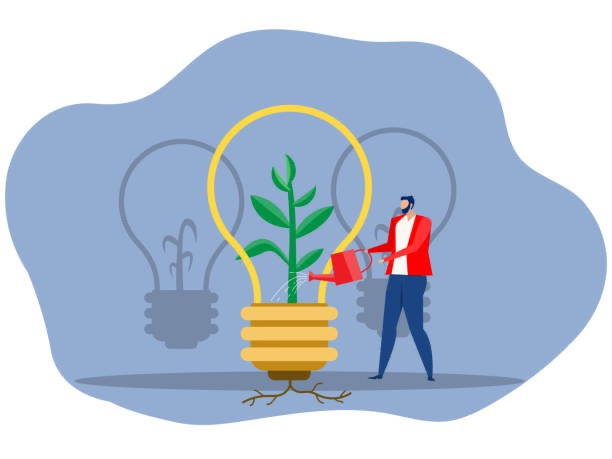
We have human needs that will continue to shape the societies we build. And that is why I’ve found myself thinking lately about the idea of incubation — the need for life to be nurtured so that fragility can give way to strength.
A similar process is necessary for democracy, especially in times of threat and change. In studying American history, we tend to define eras by where they led: the colonists chafing under monarchical rule growing into a movement for revolution; the expansion of the young republic straining the original sin of slavery until it tore the nation apart; the exuberance of the 1920s giving way to the Great Depression; the conformity of the postwar years concealing the civil-rights movement already taking root; the complacency of the late twentieth century sowing the seeds of a digital and demographic reckoning still unfolding.
During all of these times, no one could see clearly what was coming. The pace of change, the direction of the future — all of it is obscured by the noise and struggle of the moment. Yet when we look back, we can trace the larger patterns that shaped what followed.
I believe we are living through a similar incubation now — a moment when the very definition of this nation is being reimagined, when the energy for positive change is gathering strength. Future generations may one day look back on this era — with all its cruelty, corruption, and confusion — as a painful but necessary passage toward a more perfect union.
It might be hard to see it now, but the nation we will become — one that faces the wreckage of these dark times and rebuilds with creativity, grit, and determination — is already taking shape.
That’s what we hope and pray for. Thank you for being one of those who keep my head above water.
PS If I were still teaching, I would share your gift of writing with my students. “Now that,” I would say, “is excellence in writing.”
If you are ever in Ct. can we meet for a drink or a cup of coffee ?As a mother and a grandmother of eight the future seemed dire to me and I lived in dread for what would be confronting these loved ones after I was gone. Not that I could save them from the likes of Donald Trump but maybe I could be a temporary refuge for them in the midst of the current ugliness. If this is the price we must pay to birth a more perfect union and a return to rationality and sane governance I will gladly pay it objecting all the way, every day with my limited abilities. But along with millions of others.