
Leaving Us Behind
Wall Street is celebrating. Everyone else is wondering what happened to the future.
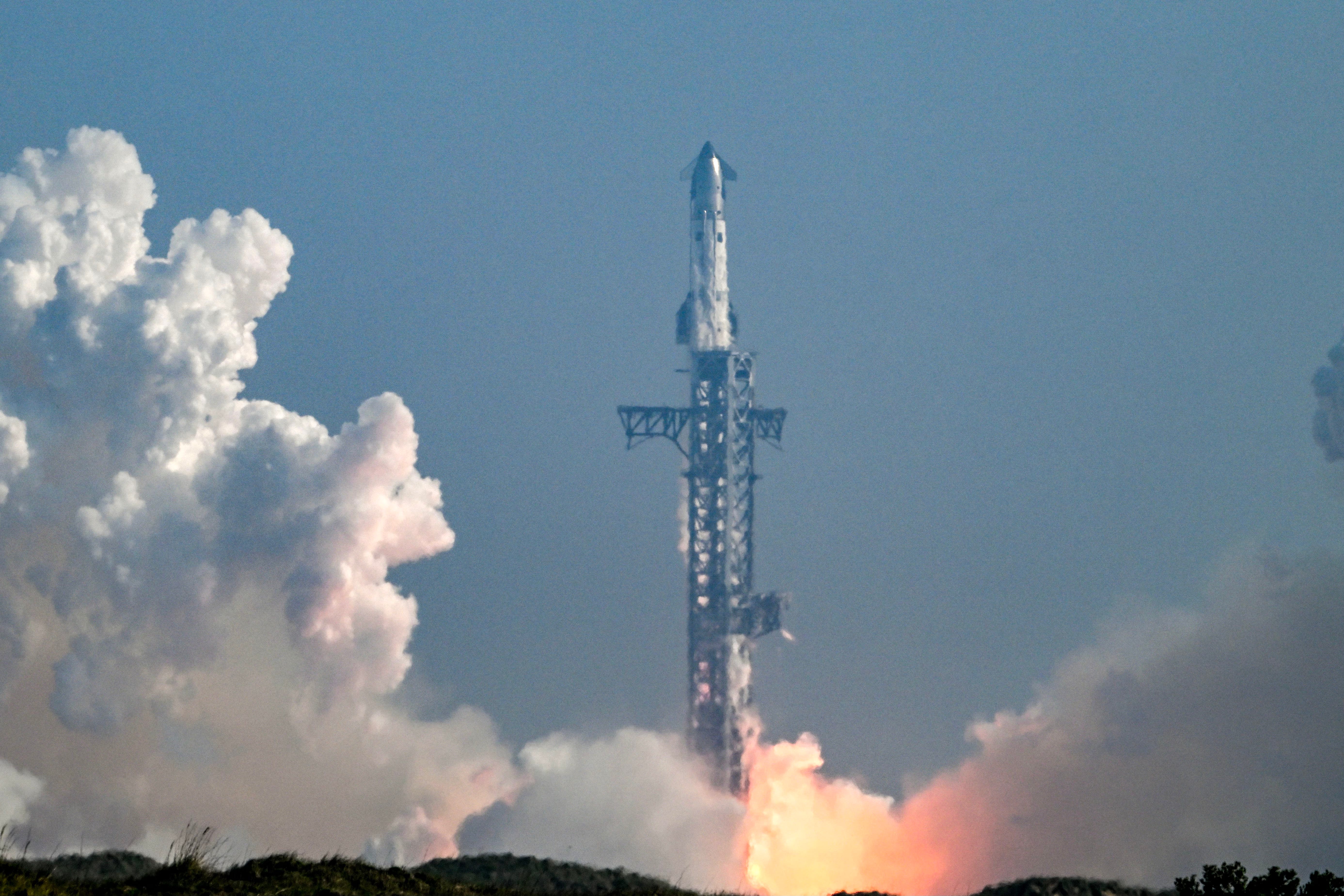
Sometimes the news arrives with its own metaphor in tow.
This week saw the crowning of the world’s first trillionaire (and it felt very much like a coronation) thanks in large part to a company that builds rockets designed to escape Earth’s gravitational pull.
You have to admire the symbolism.
I should start by saying that I have nothing against SpaceX per se. I am generally a fan of space exploration, and you have to marvel at its engineering mastery.
But here we are, living in a world beset by economic, technological, and environmental crises. A world in which vast numbers of people feel hopeless and adrift as income inequality soars at warp speed. And all the while, Wall Street is cheering a company whose mission is to leave all of that behind.
Meanwhile, waiting in the on-deck circle are the next multibillion-dollar IPOs: AI companies.
Rockets. AI. Trillionaires.
If nothing else, they should make for a tidy chapter in the textbooks of the future. That is, assuming the future still values history. Or textbooks. Or human learning.
There is a reason graduation speakers who mention AI are getting booed off commencement stages. And it is the same reason Trump’s poll numbers are circling the toilet bowl, particularly when it comes to the economy. In an especially ominous sign for Republicans, that dissatisfaction is increasingly evident among white working-class voters, long considered part of Trump’s political base.
The vast majority of people are anxious. They see that the old compact of hard work leading to opportunity is broken to such a degree that the American Dream, especially for younger generations, feels like a mirage.
And it is not an illusion. By some measures, today’s concentration of wealth among a few dozen individuals dwarfs even the inequalities of the Gilded Age.
Let’s compare this moment to another milestone in unimaginable personal wealth. The world’s first billionaire was John D. Rockefeller, whose fortune was built on oil. We now know that the fossil fuel age carried horrific environmental consequences. But oil was also the commodity that became synonymous with economic expansion. It powered a manufacturing boom that created millions of well-paying jobs and helped make possible many of the defining features of postwar middle-class life: a car in the driveway, a family vacation, a house in the suburbs.
In other words, many of the things that now feel increasingly out of reach.
If you are skeptical that the new technologies creating extraordinary wealth for a fortunate few will benefit the masses, you are hardly alone. An age of AI, robots, and massive technological and media consolidation does not feel like a world poised to deliver broadly shared prosperity. It feels like a world poised to eliminate jobs, deepen inequality, and further concentrate wealth and power.
It does not help that some of the biggest cheerleaders of this new age of disruption seem more interested in colonizing Mars than repairing the fractures here on Earth.
Humanity is not going anywhere but the home we already have. We will need to find ways to harness new technologies to help save our planet and ourselves. And we will need to devote at least as much ingenuity to reengineering the systems of government, economics, law, and democracy as we do to building rockets, algorithms, and machines.
The goal should be to create extraordinary wealth measured in life, liberty, and the pursuit of happiness, not merely in the accumulation of obscene monetary fortunes beyond human comprehension.
There's nothing wrong with rockets. The first Space Race inspired a generation because it felt like a triumph that belonged to all of us. The challenge is making sure that in this new era we are lifting off from a world that works for the many and not just the very, very, very few.
Are we willing to make the kind of economic sacrifices to get the entire human race--not just the privileged--and the planet to a place of real safety and security that, in the form of sacrificing their lives and the comforts of their homes for places of danger, our foremothers and forefathers made in World War 2?
Give up our reliance on fossil fuels and accustom ourselves to creating communities that don't rely on them? Recognize that our obsession with more sophisticated electronics is not healthy for humans or for nature? Paraphrasing Pogo, the enemy is not "out there" it is within us and, quoting Dickens from A Christmas Carol, "Beware them both [Ignorance and Want], and all of their degree, but most of all beware this boy [Want], for on his brow I see that written which is Doom".
And I think it's gonna be a long, long time--before the people can take control over the rocket man and his oligarch buddies. Hope I'm wrong.