
Our Country
Not the happiest of birthdays

Measured against the full scale of this regime’s injustice, desecration, and rapacity, the theft of pride and joy from our nation’s 250th birthday may rank as one of its lesser offenses. But it is nonetheless emblematic of the smaller injuries that accrue amid the greater sweep of cruelty, corruption, and autocracy. For alongside the anger of this age lies a quiet yet pervasive sadness over all that is being lost, steeped in confusion and uncertainty about the journey ahead.
Imagine what this anniversary could have been with different national leadership. It could have made us more united and appreciative of one another, a chance to celebrate what we share instead of stoking and exploiting our divisions.
We could have had a massive gathering on the National Mall that showcased the wonderful diversity of the country. Instead, we have a pathetic, thinly attended “state fair.” We could have had a celebratory concert with America’s most notable musicians; instead, we had musical acts pulling out of Trump’s sideshow because of his toxicity. Most of all, we could have had a national conversation about who we are, an invitation to introspection and recommitment led by those entrusted, however temporarily, with the stewardship of our national story. Instead, we have a leader who tramples on our noblest traditions and turns every occasion into a coronation for his crass ego.
For most of my life, I could tell myself that this nation’s history was largely one of democratic, moral, and civic growth. Yes, there were setbacks, and there was no shortage of suffering, but the larger arc was unmistakable from the vantage of hindsight: an expansion of the stirring words that provided a definitive vocabulary for the human search for life, liberty, and the pursuit of happiness.
Even eras of hardship and woe seemed, eventually, to lead to renewal and hope, as if the course set by the founding generation was so true in its direction that our national destiny could not waver off course for long.
It is fashionable now to look back and wonder how we could have been so naive. Certainly the currents of racism, misogyny, nativism, and greed that were present from the beginning were never expunged. Perhaps our progress was more illusory than we would like to think, more fragile than we would have believed. It is hard to argue against these conclusions considering the current evidence. Yet to simply embrace that understandable cynicism is to do a profound disservice to the countless women and men throughout American history who refused to bow to the challenges and odds of their time.
Our nation today would be unrecognizable to the founders in ways that go far beyond the technological trappings of our modern age. Our diversity and the abundance of freedoms we enjoy exist on a scale that far exceeds the confines of our founding, even when one accounts for the current threats to our democracy.
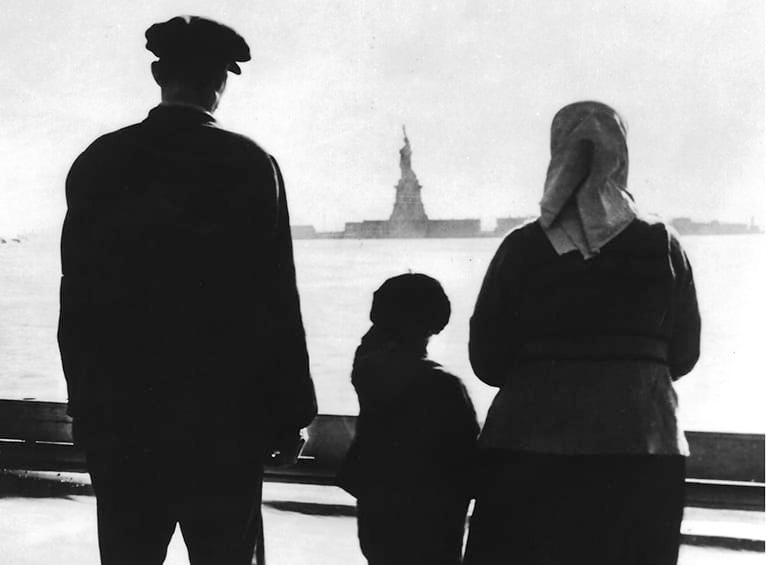
Back in 1776, we were a small nation. The first census, taken in 1790, counted fewer than four million inhabitants, including nearly 700,000 enslaved people, while Native people were counted only partially and unevenly. Only a fraction of the whole had the power to vote. Since then, the country has been remade by war, struggle, and wave after wave of arrival: by the Civil War, by the long movements for civil rights and women’s suffrage, by European and Asian immigration in the mid-19th century, by the Ellis Island influx around the turn of the 20th, and by the global immigration that followed the Immigration Act of 1965.
So when we talk about celebrating the Fourth of July, a great many of us are not simply honoring a moment in history when our own ancestors were declaring their independence. And yet the beauty of this nation has always been that all of us can adopt the spirit of independence as our own. We inherit its promises, its symbols, and its unfinished work. We also have to reckon with history’s darker chapters because they, too, are part of our complicated inheritance.
In the documentary film we are making about America at its 250th birthday, we bring strangers together for conversations about how they see the country at this inflection point. We give them questions on cards so they can drive the conversation, and one of my favorites is: “In your early life, how did you get a sense of what America was all about?”
For all of us, the answer is a mixture of formal and informal education: what we read in textbooks and what we hear from family, what we understand intellectually and what we feel viscerally. It is why there is such a battle over what to teach children in schools, and why this regime’s effort to wipe away uncomfortable truths, even in our national historic places, is so dangerous. I think back to my own childhood, even in a relatively progressive place like San Francisco, and how much of American history in school still hewed to simplistic narratives. My children, thankfully, have gotten a more complete picture.
I majored in American history and literature in college and gained a deep sense of eras and movements that were often overlooked. But all of this reading and formal instruction was buttressed by my lived experience: what I learned from my diverse classmates, including many immigrants; what I saw in the cities in which I lived; and what I learned from my family.
My earliest and most enduring embodiment of patriotism was my father’s father. He had an American flag that he would hang on major holidays outside the second-story bedroom window of his modest home on a quiet, middle-class Chicago street. Those occasions invariably included the Fourth of July, which happened to be his birthday.
But I also learned from him that to love one’s country is to question it. I heard stories of the hardships of his childhood, the injustices he saw and experienced growing up, and his own ability to change his mind, as he did about the Vietnam War.
He was a prolific writer of letters to the editor of his local newspaper, a dedicated viewer of the evening news, and an avid reader of American history and biographies. He met my grandmother at a public lecture. She went back to college after their children were grown and became a teacher. My grandparents embodied the American Dream while also striving to make the country better. They were engaged and informed, and that became a model for my own relationship with this country.
After my grandparents died, we found some old family papers suggesting that my grandfather’s birthday may not actually have been July 4th, but a few days earlier. Perhaps the mix-up was the result of poor recordkeeping for a child born in the immigrant tenements of New York City in the first years of the 20th century. Or perhaps my grandfather, who loved this country with all his being, chose as a child to align his own birthdate with the nation’s.
We will never know the truth. But the more I thought about the revelation, the more I loved the idea that it had been his conscious choice. After all, this is a nation that allows us to reinvent our pasts in favor of new beginnings.
As we mark the 250th anniversary of American independence, we also have a choice. We can choose a nation rigidly defined and tethered to its most restrictionist roots. Or we can choose a nation that embraces its loftiest rhetoric and is then willing to do the hard work of making it real.
The purpose of democracy is that we, the people, should have the right to choose. And the purpose of American democracy is that no matter where your ancestors come from, you have the right to claim the nation’s history as your own. That history informs us and inspires us to locate the destiny of the country not in land, borders, and inherited identities, but in a spirit of rebirth, regeneration, and reimagination.
That we are in the midst of a significant struggle this Fourth of July is perhaps the most honest way we can celebrate the true meaning of the day. We want life to be better. We want liberty to be greater. And the sadness we feel is itself a yearning for the pursuit of happiness.
None of this is ever easy. Those who proclaimed independence in 1776 still had to fight years of war in order to secure it. Words, as lovely as they may be, require action to give them the full force of definition. Certain truths may be self-evident, but that does not mean they are self-fulfilling. This day belongs to us, as does its meaning, and so does the responsibility to make its promise real.
Happy Fourth.
Happy 4th. And Canada is sending 250 MapleTrees. Who knows what he will do with them.
There’s a poem by Kenneth Patchen whose title applies today : Hallelujah Anyway! Because, as my father once told me, if you don’t love someone “anyway” you don’t really love them. The same goes for this country
So Happy 4th , anyway.