
Two Paths
Nature cannot be fooled

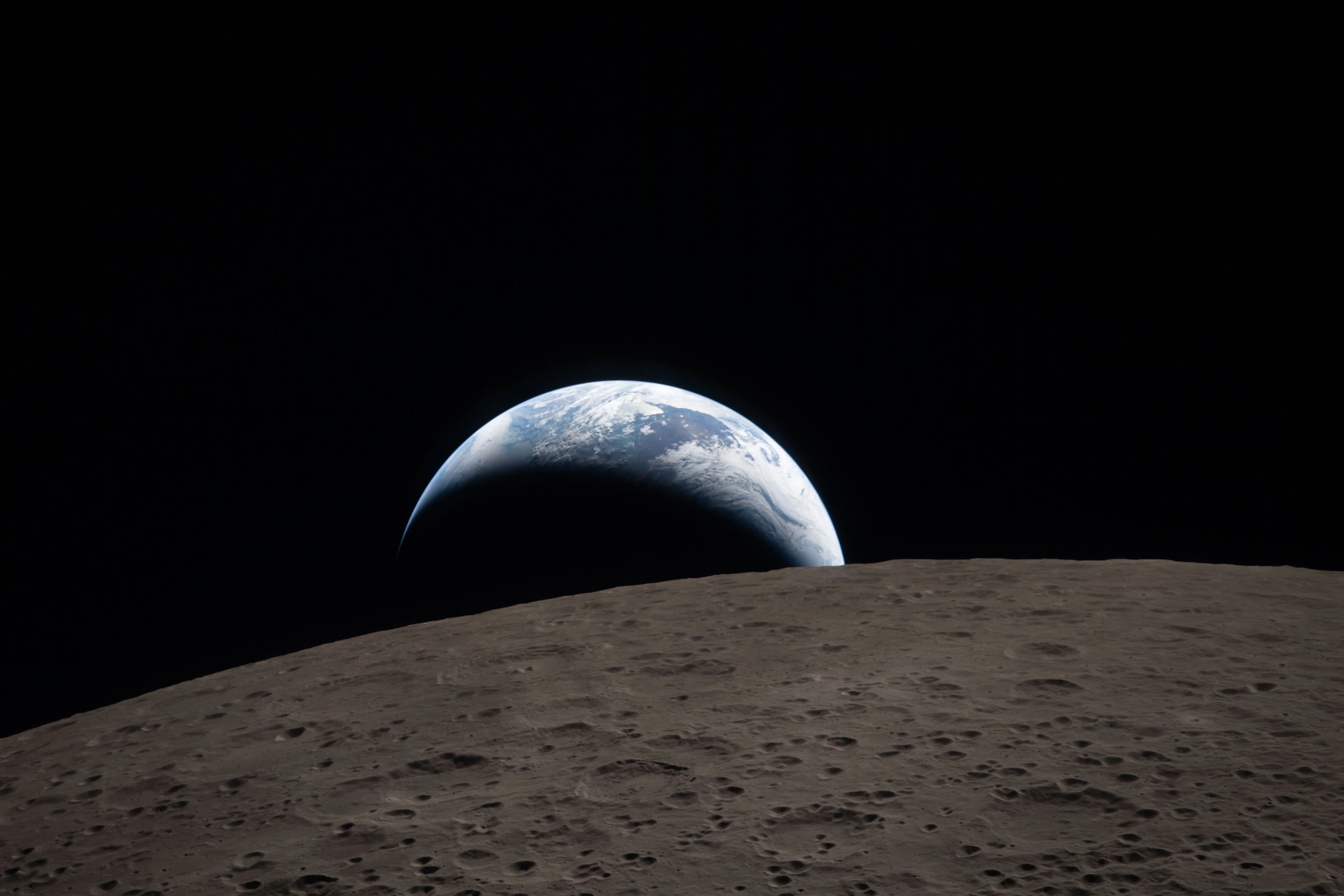
At first glance, the two biggest stories of the past week, the mission of the Artemis spacecraft and the war in Iran, seem to have little in common beyond the fact that both were launched by the United States government.
One is a stirring success. The other a metastasizing failure.
One inspires the world with awe and wonder. The other leaves it reeling from death and chaos.
One celebrates the human instinct to push beyond horizons in search of knowledge and insight. The other feeds a darker impulse for violence and destruction.
The list could go on.
But we can learn a great deal from contrast and comparison. That is why these two events should be viewed in tandem.
Because in doing so, we can see both the rot of this regime and the capacity of this nation to produce something far beyond what these destructive fools could ever imagine.
In the dissonance between lunar exploration and an insane war of choice, we can see what truly makes America great, and the petty vindictiveness that drives those currently misleading the nation.
We can see why expertise is essential. Why you must plan and prepare for the unknown. Why you must approach challenges with humility. Why you should seek out collaboration. And why you must be willing to learn from your mistakes.
In short, one path is the path of progress, uplift, and hope. It is built on strategic thinking, iteration, and science, the striving to reach for precarious possibilities through ingenuity, grit, and perseverance. The other path is one of folly, paved with petulance, bloodthirstiness, small-mindedness, unchecked biases, bad assumptions, inconsistencies, and spite that characterize so much of this unserious regime’s approach to governance, its rhetoric and actions, and the way it inflicts its stupidity on the world.
Let us be very clear: the leaders of this regime do not have the temperament, intelligence, tenacity, or creativity to achieve great things such as space exploration. Like zombies, they feed off the strength of what those who came before them built, using traits they do not possess. These parasites have, in little more than a year, sucked out our nation’s strength and goodwill, built over decades at great cost.
They gamble away the professionalism of our military on a conflict they brashly believed would be easy, and that is now leaving us profoundly weakened. They took an economy that was resilient and growing and wrecked it on the shoals of tariffs, reckless tax cuts, and war. They have torched our public health system, scuttled our preparation for the energy sources of the future, and sold out our most loyal allies.
Watching the Artemis II astronauts splash down in the Pacific Ocean after their trip to the moon gave those of us who were not around, or too young for the Apollo missions, our own album of mental images, images that in many ways mirrored that bygone era. The capsule descending beneath its parachutes. Bobbing in the ocean with its flotation devices. Navy helicopters circling, retrieving the astronauts. The unmistakable sense of a remarkable accomplishment.
It was a turning back of the clock to another difficult era in our nation’s history, another time of war and division, when we needed to remember what greatness could be and the power of unity and our common humanity.
The fact that we hadn’t gone back in 50 years, and that when we did we returned in a way so similar to that distant time, shows how human progress can stutter and waver. But it also reveals an invariable spirit, one that drives us forward and cannot be quenched.
Life is about the unknowable. It is about challenges and unanticipated consequences. It encompasses our own frailties.
The intervening decades of space exploration brought remarkable achievements, the Hubble Telescope, the International Space Station, the courage of the astronauts who flew aboard the Space Shuttle. But they also brought tragedy, and lessons in our own hubris and blindness.
In 1986, in the wake of the Space Shuttle Challenger disaster, just 73 seconds into flight, which killed seven astronauts, the Reagan administration launched a commission to investigate. One of its members was the legendary physicist Richard Feynman, who identified a fatal flaw in the design of the shuttle’s booster O-rings. Just as importantly, he exposed a systemic failure within NASA’s culture to recognize the danger and operate safely.
In the final line of his conclusion to the report, Feynman wrote words that became famous and speak directly to our time: “For a successful technology, reality must take precedence over public relations, for nature cannot be fooled.”
Reality must take precedence. We cannot turn our decision-making over to public relations or propaganda. Nature cannot be fooled, because we cannot hide from the truth forever. These are the principles that can guide us to greatness, and we ignore them at our peril.
Yet we have a regime now that shuns reality and spins relentlessly, leaving nature and truth to catch up with us in horrific ways.
But Feynman’s lessons are not only about the negative. He reminds us that technology can be successful, that humans have the capacity not only to create, but to learn from nature and experience, to improve, to tinker, and to build something better and more robust. Evidence of this is found throughout history, just as evidence of human hubris is everywhere as well.
The enduring strength of a democracy is that we have the power to choose. And in this past week, we have seen clearly where choosing well and choosing poorly can lead.
Poignant piece. Thank you for summing up so eloquently what I (and I suspect, many Americans) have been feeling this week.
What you write is profoundly true and beautifully written.