
Forgiveness
Giving America a Second Chance

I was in the visiting room of Maine’s maximum-security prison.
Four men sat in heavy plastic chairs around an industrial wooden table, surrounded by camera equipment and my colleagues on the filmmaking team. We had organized one of the discussions we are filming for a forthcoming documentary about the state of the country as it approaches its 250th anniversary.
We are traveling across the United States to bring together people of diverse backgrounds to engage in dialogue. Our last stop was in Tucson, Arizona. Our next stop will be in Birmingham, Alabama.
Because we want these conversations to be self-generated, we’re not calling them interviews. The director, Ian Cheney, dubs them “encounters.” That feels right.
The idea for this particular encounter, which took place a few months back, grew out of our early brainstorming about which voices we should highlight in the project.
My friend Brandon Yadegari Moreno, a producer and cinematographer on the film, pushed us to make sure we heard from people who feel alienated, apathetic, or barred by law or circumstance from participating in electoral politics. After all, if “I Don’t Vote” were a political party, it would far outpace both Democrats and Republicans.
As we planned out the film shoots, the team was eager to include an encounter with incarcerated people. But none of us predicted the conversation that emerged. It was one of the best we’ve filmed — candid, surprising, and deeply personal. When it ended, all four men thanked us generously for including their voices, for allowing their perspectives to be heard. For being willing to listen.
It’s vital, as we look back at the history of this country, that we consider which perspectives are taken into account. Not only as filmmakers, but as a nation. There is a line of judicial thinking in constitutional law rooted in “original intent.” What were the Founders thinking when they drafted the documents that established our republic? But another way of considering that question is to ask who had the privilege and the power to be in the room where it happened. Not women. Not the poor. And certainly not enslaved people or Native people.
In her wonderful book We the People, historian Jill Lepore considers how different our nation might have been from the beginning if all who were living here had been allowed to have their voices heard in shaping the structure, limits, and rights of our system of government.
One of the narratives of the United States has been the expansion of those whose voices matter. There was a Civil War. And a Civil Rights Movement. Women fought for and won the right to vote. There have been efforts to make voting easier for marginalized communities. But there have also been countervailing forces determined to preserve hierarchy and protect privilege.
Sadly, we can still see how much power remains concentrated in the hands of wealthy white men. Such as the MAGA oligarchs, the Epstein class, and the heavy overlap between the two.
In their discussion, the imprisoned men talk about power and class. They talk about government and who it benefits. They talk about affordability and the importance of hard work. They talk about their own mistakes and failings. It was thought-provoking and raw, but also civil and elevated.
What lingers with me most is something one of them said toward the end.
When we asked if there was something they wanted the country to think about, he spoke of second chances. His demeanor was calm but determined. He said that none of us should be judged only for the worst of our moments. That he has tried to make amends with those he has hurt. That moving forward, as all of these young men hope to do when they get out, requires forgiving others and forgiving oneself.
The other men at the table nodded in agreement and thanked him for expressing what they were feeling as well. They added their own perspectives, acknowledging that there has to be responsibility for actions, that there can’t be an unlimited well of forgiveness. But we have to give each other the grace to change, to make amends.
Their discussion of forgiveness was focused on the personal. It keeps threading its way back into my thoughts, but I also find myself thinking about forgiveness more broadly. About the country we are trying to document. About the assumptions and judgments with which we view one another. A sense of understanding and humility should not govern only our interactions with friends, family, and our immediate community. It is also a lens through which we might approach civic life — our country, and those who live here.
I thought of a good friend of mine who lives in Montana and knows many people who are politically conservative. He told me that after what happened with ICE and Border Patrol in Minnesota, he has never seen some people in his community question their views as much as they are now.
They are still processing and remain apprehensive and suspicious of those on the other side of the political divide, wondering how they will be judged if they express some of their tentative yet evolving thoughts.
We’ve heard others say that the war in Iran is prompting them to question an administration they once supported.
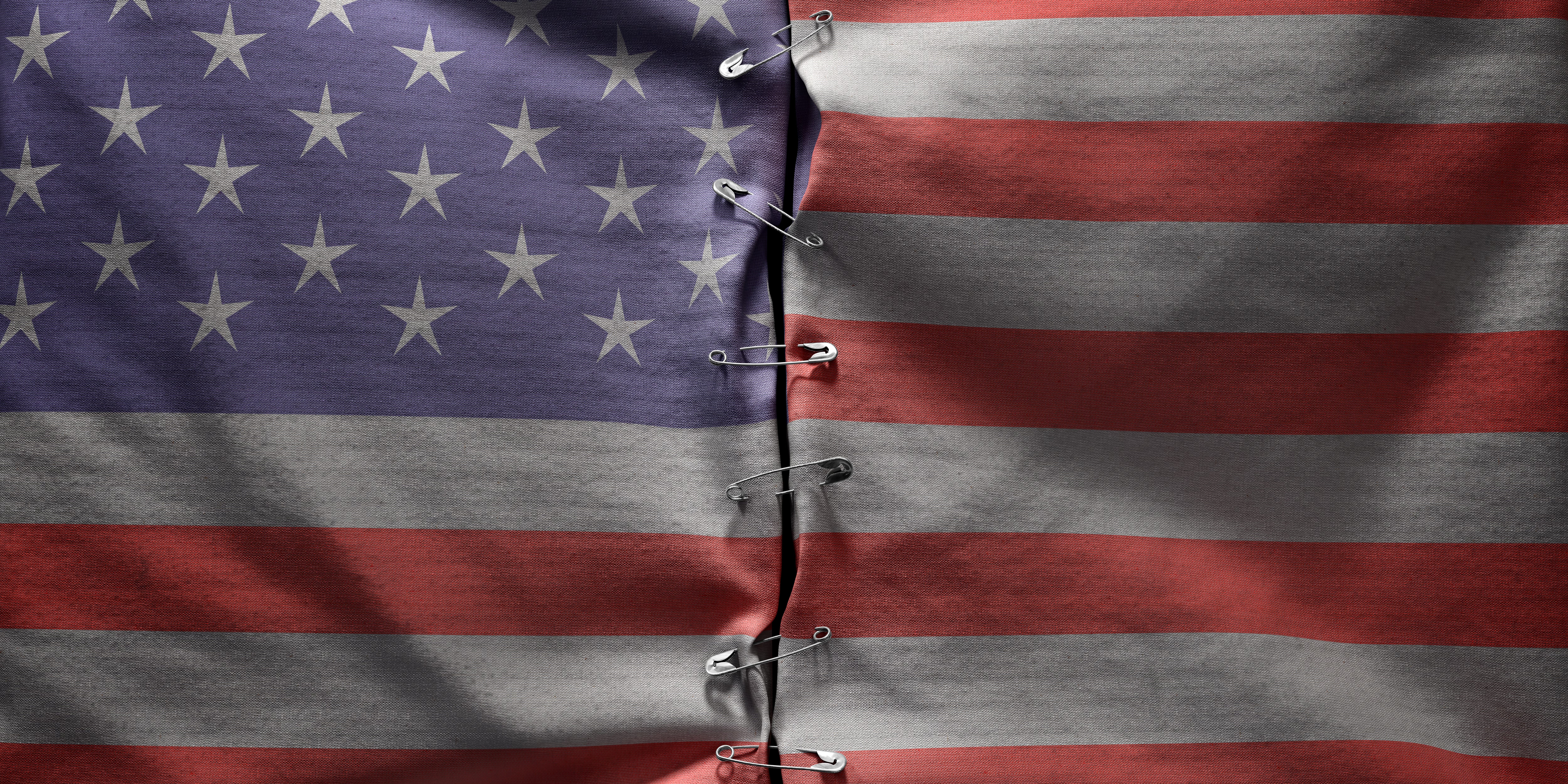
We need to find ways to welcome people back into dialogue, to allow them not to feel permanently judged, to rediscover places of common ground, and to begin the hard work of stitching this country back together.
None of this is simple. There is real anger in this country. Real harm. Real fear. For many, forgiveness feels premature, even insulting, in the face of what has happened. But that just makes it all the more imperative that we begin to find a way back from the brink.
This is not to say that forgiveness can serve as a facile substitute for responsibility. Those who have committed crimes in the service of autocracy and corruption should be prosecuted to the full extent of the law. There must be accountability for the horrors that are taking place.
And there is still a great deal of struggle ahead. We must organize. We must vote. We must ensure that this cruelty and corruption are defeated.
And yet history shows, time and again, that the only lasting way we overcome the hatreds and animosities that have thrown us into conflict and cascaded pain is by talking to one another, recognizing our common humanity, making amends, and yes, forgiving.
I wrote my college thesis on America’s occupation of Japan after World War II. It was a complicated time, marked by bigotry and mistakes. But it was also shaped by a belief within the United States that after a horrific regime had been defeated, and after an imperfect form of accountability, two peoples trained to hate one another could begin a new chapter. Two countries that had fought one of the most savage wars in human history could become friends. Forgiveness was possible even after the surprise attack on Pearl Harbor, the torture of prisoners of war, the use of flamethrowers to burn people alive, and ultimately the dropping of two atomic bombs.
We also forgave Germany. Two of our worst enemies became two of our closest allies.
This spirit of second chances and forgiveness must extend to our relationship with our own country. We cannot shy away from the ugliness of our history, and we must reckon with this era of autocracy and corruption. But should we measure ourselves solely by our worst moments? Should we judge the United States as immutable? Or should we allow for the possibility of growth, repair, and renewal?
As the men stood and waited for the guards to return them to the cellblock, we shook hands and wished one another well. They said they hoped their perspectives would help our project and do some good. I am grateful they will be part of our film. But this was only a snapshot in time. All of these men will be released while they are still relatively young. I hope they are not judged only by their pasts.
I hope they get their second chances. I hope our country does as well.
Forgiveness is one thing. Reparations, another. Justice, a third—none subordinate to the others.
Forgiveness is personal; it cannot be prescribed at the civic level. Reparations are material; they address measurable harm. Justice is structural; it establishes accountability.
Conflating them risks diluting all three. A nation cannot “forgive” its way out of obligations it has yet to meet. Nor can it substitute sentiment for redress.
If there is to be renewal, it must rest not on grace alone, but on a clear sequence: accountability, repair, and only then—if it comes at all—forgiveness.
I think about this alot, Elliot. Just as democracy requires good listening and the willingness to take a risk and grow your point of view into a (perhaps) different form, forgiveness requires an openness that cannot happen without healing. When people are deeply angry or deeply hurt they are not open; they are closed and judgemental. They are protecting themselves. The hurt amplifies the hurt. If we as a society can unwind this spiral very gently and with real compassion, healing can begin to lead to the openness we all need and hope for. I appreciate that your cell-mates understand this is a two-way process: forgiveness of the other, and forgiveness of one's own self.